
Storm and ice damage siding repair in Cleveland addresses two very different but equally common causes of siding damage in Northeast Ohio: summer wind and hail events, and the winter freeze-thaw and ice dam cycle that Lake Erie’s climate produces every year. Call (216) 438-9598 to get storm or winter damage assessed and repaired.
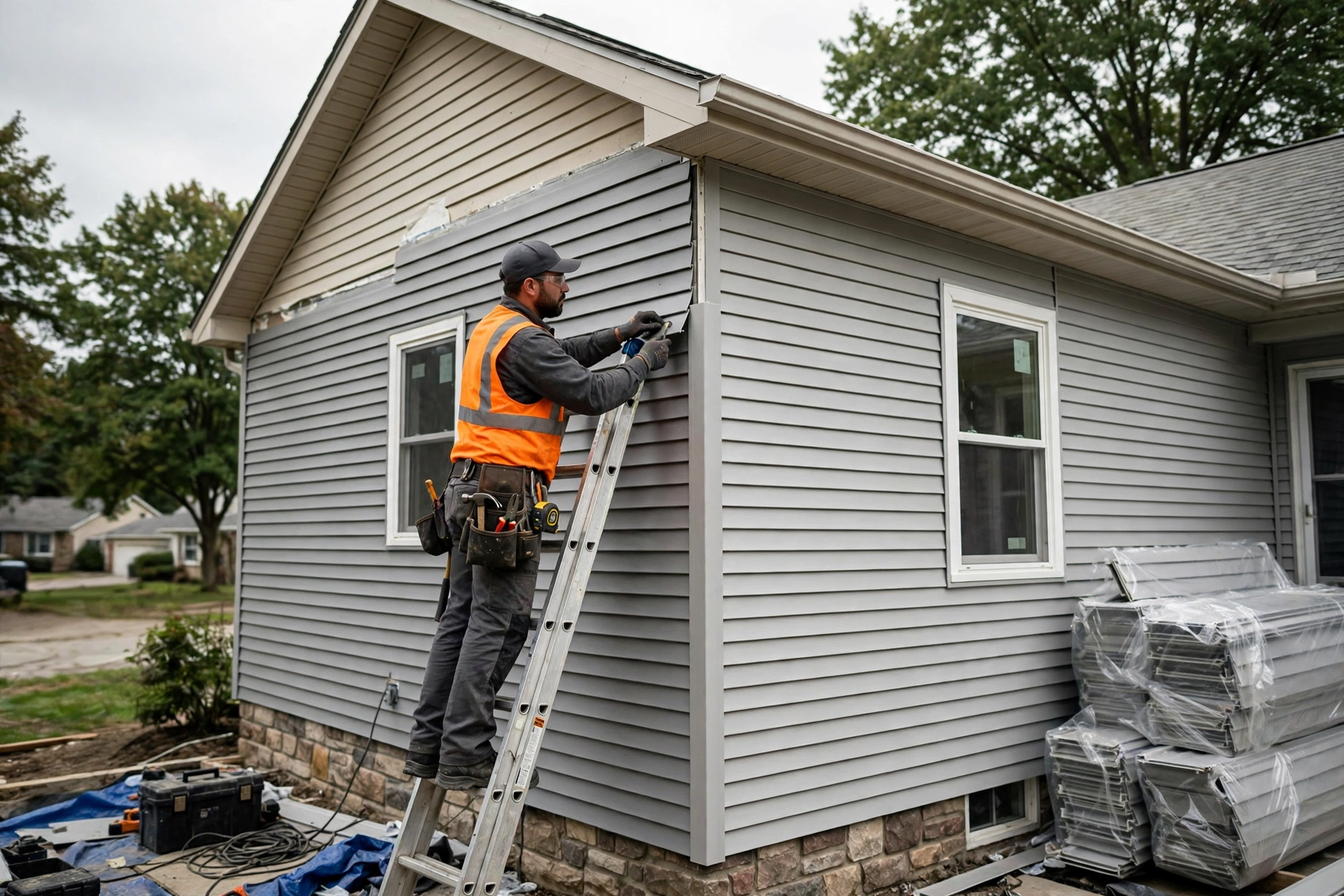
Signs of Storm or Wind Damage
- Dents or cracks across siding panels, especially on the side of the home facing the storm
- Missing or loose panels after high wind
- Damage to fascia, soffit, or trim alongside the siding itself
- Debris impact marks from wind-blown branches or objects
- Gaps that have opened at corners or trim joints
Signs of Ice Dam and Winter Moisture Damage
- Staining or discoloration on siding near the roofline, especially after a heavy snow winter
- Icicles forming heavily along one section of roofline, a common ice dam indicator
- Water stains or bubbling on interior ceilings near exterior walls
- Fascia or soffit showing signs of moisture damage or rot near the roof edge
- Siding that feels damp or shows mold near the bottom of an ice dam-affected area
How Ice Dams Actually Damage Siding
An ice dam forms when heat escaping from the attic melts snow on the upper roof, which then refreezes at the colder eaves, building up a ridge of ice. Water continuing to melt above that ridge has nowhere to drain and backs up under roofing material and, in many cases, behind fascia, soffit, and the top courses of siding. This is fundamentally different from a leak caused by storm wind or hail — it is a slow, repeated moisture intrusion problem tied to a home’s insulation and ventilation, not a one-time impact event, and it tends to recur every winter until the underlying attic issue is addressed.
Northeast Ohio and Lake Erie Storm Risk
Cleveland’s position on Lake Erie creates two distinct storm risk patterns. Summer brings the same severe thunderstorm risk as much of the Midwest, sometimes with damaging straight-line wind and occasional hail. Winter brings lake-effect snow events, where cold air moving over the relatively warmer lake picks up moisture and dumps heavy, localized snowfall on the Cleveland area, sometimes measured in feet rather than inches over a short period. Both patterns put real, different kinds of stress on exterior siding.
What Happens During an Assessment
Full exterior walkthrough
Every side of the home is checked, including the roofline for ice dam evidence and all walls for wind or impact damage.
Documentation
Damage is documented with photos, useful both for repair planning and for any insurance claim you decide to pursue.
Root cause identification
For ice dam damage specifically, the underlying attic insulation and ventilation issue is identified, since repairing siding without addressing the cause means the same damage returns next winter.
Working With Insurance
Many homeowners insurance policies cover both storm damage and, in many cases, ice dam-related damage to siding and interior spaces, though coverage details, deductibles, and claim processes vary significantly by policy and insurer, and ice dam coverage specifically sometimes has different terms than sudden storm damage. Clear photo documentation taken close to the time of the damage tends to make the claims process smoother regardless of which insurer is involved.
Storm & Ice Damage Repair Across Cleveland
Storm and ice damage repair is available across Cleveland, including Ohio City, Tremont, Detroit-Shoreway, Old Brooklyn, and Shaker Square.